June 29, 2026
When Healing Doesn't Feel Like Healing
One of the most common questions I get asked as a therapist is, "Am I making progress?"
Sometimes people ask it directly. Other times it shows up in different ways: "Do you notice any changes?" "I don't think I'm getting enough out of therapy." "I leave sessions feeling worse than when I came in." Beneath these questions is often the same concern: If healing is happening, shouldn't I be able to tell?
I understand where this comes from. Most of us grow up with a particular idea of what healing looks like. We imagine it as a fairly straightforward journey from problem to solution. Something hurts, we work on it, and gradually it hurts less. We expect progress to feel encouraging and obvious. We expect ourselves to feel lighter, clearer, and more confident as we move forward.
But in my experience, both personally and professionally, healing rarely unfolds that neatly.
Many people come to therapy hoping to get rid of something. Anxiety, grief, self-doubt, loneliness, difficult memories, painful relationship patterns. And while symptoms can absolutely improve, healing is often less about making these experiences disappear and more about changing our relationship with them. The anxiety may not vanish entirely. The grief may still visit. The difficult family member may not suddenly become easy to deal with. What changes is the hold these experiences have on us. They become less overwhelming, less consuming, less capable of determining our every move.
Before any of that happens, however, something else usually comes first. We begin to notice.
Healing often starts long before someone enters a therapy room. It starts when something begins to feel off, even if we can't yet explain why. Sometimes it's the realisation that you never really look forward to seeing a particular person. Sometimes it's noticing that you spend days recovering from every family gathering. Sometimes it's the knot in your stomach before a meeting, the exhaustion that follows a conversation, or the tears that arrive after what seems like a small comment.
These moments are easy to dismiss. We tell ourselves we're overthinking. We convince ourselves we're being dramatic. We explain away our reactions because we don't yet have a framework for understanding them. But often, these experiences are our minds and bodies registering something before we've found the language for it. The work of healing frequently begins with taking those signals seriously.
"What makes healing particularly confusing is that awareness doesn't always feel good."
In fact, one of the reasons people sometimes feel worse in therapy is because they are noticing things they have spent years trying not to notice.
The relationship you've been making excuses for, the grief you've been avoiding, or the loneliness you've been distracting yourself from- all of this becomes harder to outrun. The coping strategies that once felt necessary begin to reveal their costs.
It's understandable that this can feel discouraging. We often imagine that healing should reduce discomfort. Sometimes it does. But often, healing requires us to move through discomfort rather than around it. There is a difference between feeling worse because we are becoming overwhelmed and feeling worse because we are finally allowing ourselves to acknowledge what has been there all along.
This is also why healing rarely follows a straight line. Rather, it’s more like moving in circles. At times, it can feel as though you are back where you started. You find yourself having the same conversations, feeling familiar disappointments, or confronting issues you thought you had already worked through.
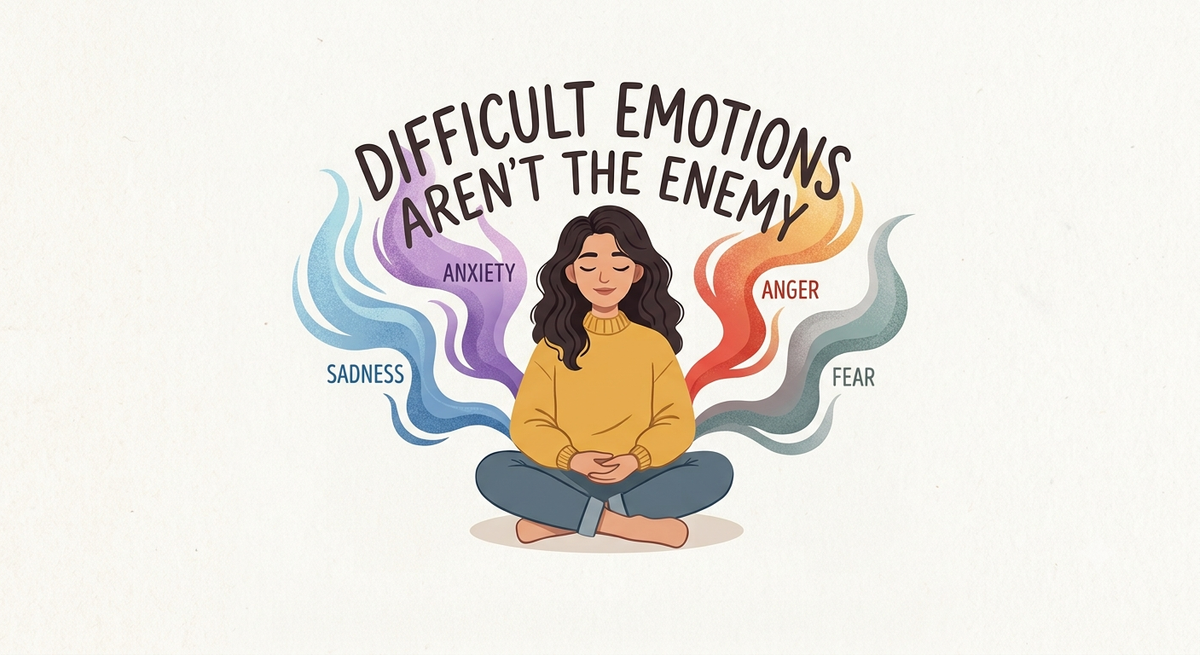
But healing is not measured by whether old feelings return. It is measured by what happens when they do.
Do you recognise the pattern sooner? Do you respond differently? Do you recover more quickly? Do you have more choices available to you than you once did?
"The path may look familiar, but you are not the same person walking it."
Perhaps this is why healing can be so difficult to measure while it is happening. Most meaningful change does not arrive in dramatic breakthroughs. It rarely announces itself. More often, it appears in small moments that are easy to overlook.
You recover from disappointment more quickly than you once did. You stop replaying a conversation for hours. You notice what you're feeling before acting on it. You ask for help instead of struggling alone. You tolerate uncertainty without immediately needing answers. You stop abandoning your own needs to keep everyone else comfortable.
These moments won't make for inspiring before-and-after stories. Yet they often represent profound change. They rarely look like the versions of healing we are taught to expect. But over time, they add up.
And while it may not always feel like progress, it is often exactly what progress looks like.